

Baptism is the foundation of Christian life
Baptism – is the foundation of the Christian life, the gate of God’s life and the gate of the other sacraments. Baptism frees us from sin, makes us children of God, members of Christ, leads us into the Church and makes us sharers in her mission. Baptism – is birth through water in the word. The word «baptizo» (baptism), translated from Greek, means immersion in water. It is a symbol of the death and resurrection of the one receiving baptism in the death and resurrection of Christ.
St. Paul calls baptism – «the washing of regeneration and renewal in the Holy Spirit» (Titus 3:5).
The pouring of water signifies being born of water and the Holy Spirit, about which Jesus spoke to Nicodemus (John 3:1-21).
Jesus Christ instituted the sacrament of Baptism with the words:
«Go therefore and make disciples of all nations, baptizing them in the name of the Father and of the Son and of the Holy Spirit» (Matt 28:19).
Throughout the history of salvation, God prepared people for the institution of Baptism. The Bible says that water is the source of life and fruitfulness:
«The Spirit of God was moving over the waters» (Gen 1:2).
In Noah’s ark we see a symbol of Baptism, for it saves from eternal death. The miraculous crossing of the Hebrews through the Red Sea, which forever separated them from their enemies – the Egyptians, symbolizes the liberation of the one who has received Baptism from slavery to the devil. The miraculous crossing of the Hebrews through the Jordan and their entry into the promised land symbolize entry into the Kingdom of God, which begins on earth and will continue forever.
All the prophecies of the Old Testament are fulfilled in Christ. Jesus begins His saving mission by receiving Baptism from John the Baptist. Christ did not need this Baptism, but He took upon Himself the sins of the whole world and carried them into the waters of the Jordan, prefiguring that everyone who wishes to receive the saving fruits of His death and resurrection must receive Holy Baptism. After the Resurrection Jesus gave His Apostles a clear command:
«Go and teach all nations, baptizing them in the name of the Father and of the Son and of the Holy Spirit, teaching them to observe all that I have commanded you» (Mt 28:19 – 20).
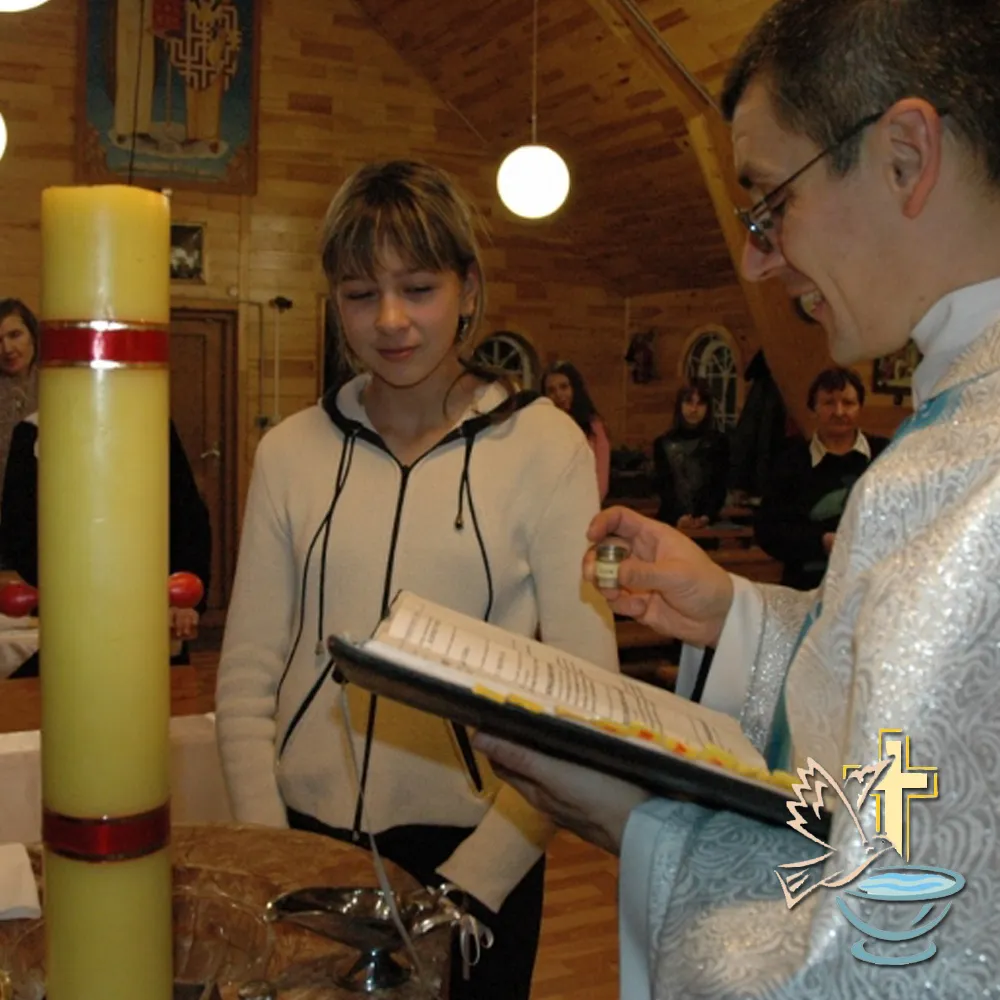
Anyone may receive Baptism – adult or child. The Baptism of adults is preceded by preparation for Christian life, called the catechumenate. The Catholic Church administers Baptism to little children, because she wants a person to receive sanctifying grace as early as possible and become a child of God, a member of the Church, and share in the Church’s blessings. Moreover, the Church strives to free the child as early as possible from slavery to the devil and to cleanse him from original sin. Little children cannot themselves renounce the evil spirit and profess the apostolic faith; therefore, the Church requires parents and godparents to renounce evil, profess the faith, and promise to teach the child the truths of the faith and raise the child in Christian morality.
Before First Confession and First Communion the child consciously renounces evil and professes the faith. Having reached moral maturity, he will again with full responsibility renounce the devil and profess faith in Jesus Christ, receiving the Gifts of the Holy Spirit in the Sacrament of Confirmation, which is the complement and strengthening of baptismal grace. Baptism is absolutely necessary for salvation. Jesus says in His conversation with Nicodemus:
«Unless one is born of water and the Spirit, he cannot enter the kingdom of God» (John 3:5).
Besides Baptism by water and the Holy Spirit, there is also Baptism «by water», «by desire», and «by blood».
Baptism «by water» is spoken of when the sacrament is performed not by a priest but by a lay person (danger of death, difficult conditions when contact with a priest is impossible or extremely difficult), although it has the same effects as baptism by the hand of a cleric. This person must intend to do what the Catholic Church does during baptism and must believe that he is performing the sacrament. When an unbaptized person gives his life for faith in Christ – this is baptism «by blood».
If an unbaptized person dies but was preparing for baptism and wanted to receive it – this is baptism «by desire». In both of these cases, the person receives the effects of baptism, although he does not receive the sacrament. Baptism brings the remission of all sins, original and personal, as well as the punishment for them. Baptism makes a person a new creation, a child of God, a member of Christ's Church.
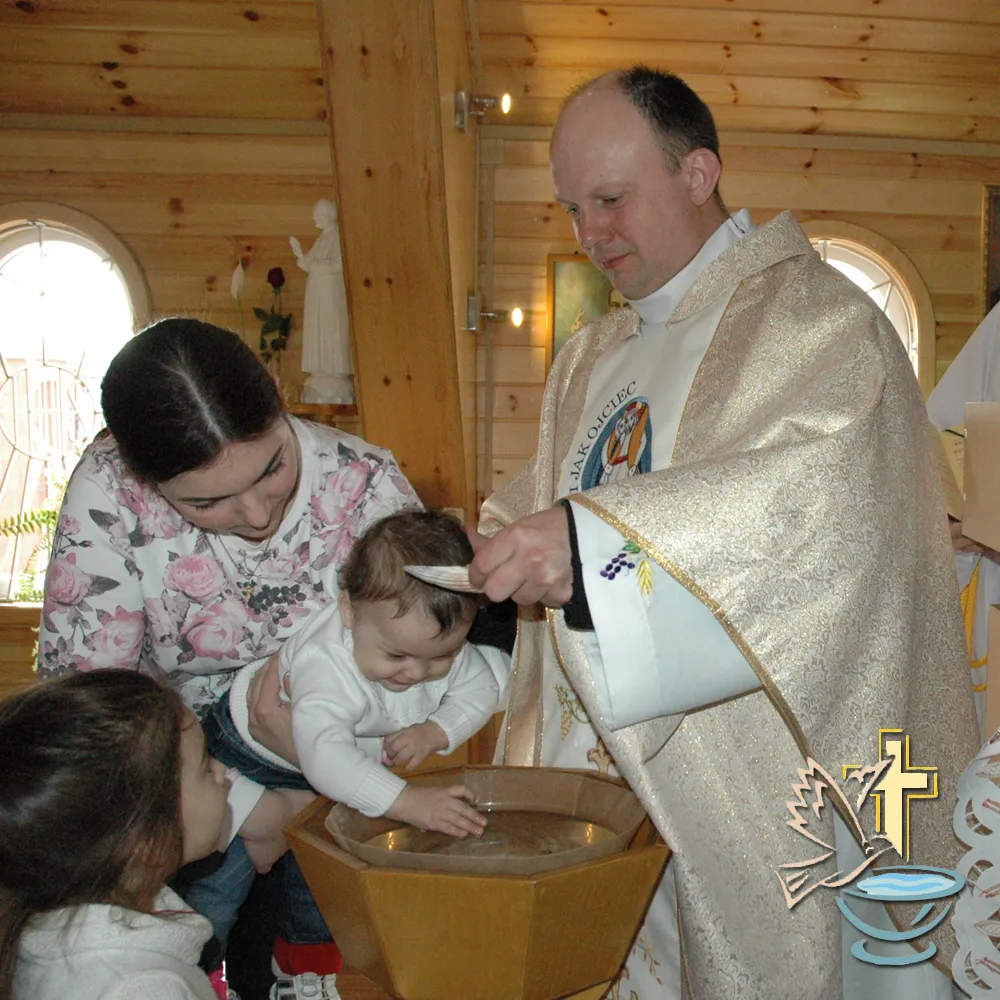
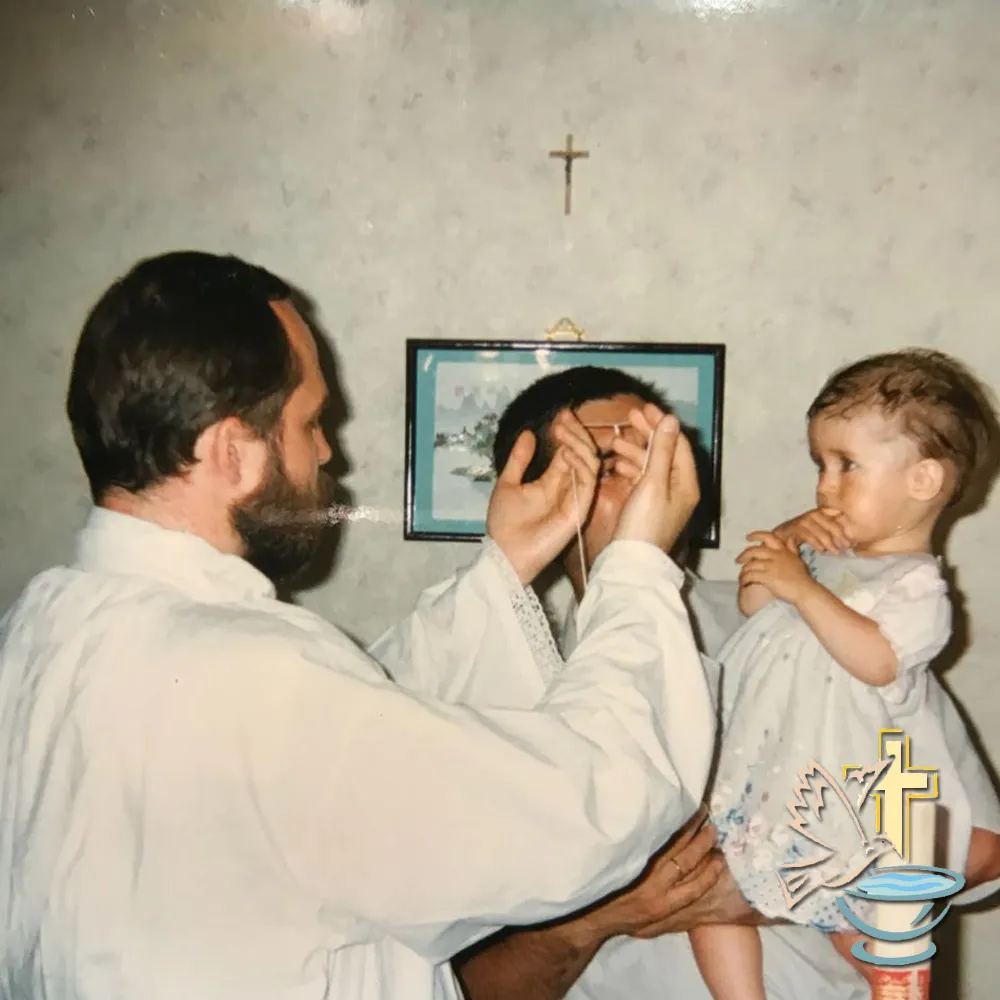
Baptism is performed by triple immersion of the person being baptized in water or by pouring water on his head, while simultaneously saying the words – “N. ... I baptize you in the name of the Father, and of the Son, and of the Holy Spirit.” Baptism may be performed only with water – blessed or ordinary (one may not baptize with any other liquid: milk, a beverage, etc.). The person being baptized must be given a holy name, and, if possible, godparents (even one) should be invited for him, and prayers should be said – “I believe in God...” Baptism can be received only once in a lifetime, for it leaves on the soul of the believer an indelible spiritual seal, which makes the baptized person capable of participating in Christian worship.
Gallery